Saturday, September 6, 2014

Freeletics: C&S Coach Week 1

I finished my first week of the C&S Coach, and surprisingly I actually found it kind of easy. I'm sure it's mostly because the Coach is still trying to determine my level of fitness, but it's probably also safe to say that I'm starting off with a pretty solid base after having already done five weeks of Freeletics. When it came time to give feedback on how the week went though, I said that the difficulty was just right. I've been hearing some horror stories from the people who said that it was too easy and then got slammed with unbelievably tough sessions in the next week, and I definitely didn't want to experience that. Overall, I had a lot of fun with the first week; it offered up some great workout diversity and it did a good job of demonstrating the new aspects of the program.


The two biggest changes to the Freeletics program are the introduction of different versions for each workout and the addition of mandatory runs. The number of reps and the basic principals remain the same, but all of the workouts now have three versions: endurance, standard, and strength. Endurance uses the modified forms of the exercises to allow the workout to be completed at higher speeds, standard is basically what we're already familiar with, and strength features forms of the exercises that are even harder than doing the standard workouts with a star performance. This is a change that I really like since the added variety makes it easier to progress through the program and to work towards specific goals; the mandatory runs, on the other hand, were not nearly as well thought out.

Many of the Freeletics workouts already included running as a component, but now runs can be assigned by the Coach on their own; this generally ends up being a series of short sprints or a longer endurance run, and usually you'll see one or two of these running-only workouts each week. As a runner though I feel qualified to say that running requires specified training, and without a planned progression to gradually increase mileage over time, it's extremely unlikely to just jump into it without getting injured. My first assigned run was an 8K and that was no problem at all, but I've seen other people with much less experience given a 10K for their first run. While a reasonably fit person can cover that distance with plenty of walking breaks thrown in, it's really not the right way to get into running, and I find it to be an incredibly scary prospect that the running workouts go all the way up to 42K, a literal marathon. Without the ability to opt out of runs completely, or at least the option to limit the distance of these runs, this is going to cause significantly more harm than good.

The Freeletics team has apparently been getting a ton of customer feedback since the new changes came out, so hopefully some of the bigger concerns will be taken care of. I'm fully committed though regardless of what happens, so I'm just ready to begin my second week.

Session 1: Iris (36:43) (*) (PB)
Session 2: Ares (11:31) (*) (PB)
Session 3: Hyperion [endurance 3/5] (5:22) (*) (PB) | Poseidon (7:39) (PB)
Session 4: 8K (59:22) (PB)
   * blue text denotes additional workouts unassigned by the Coach

Tuesday, September 2, 2014

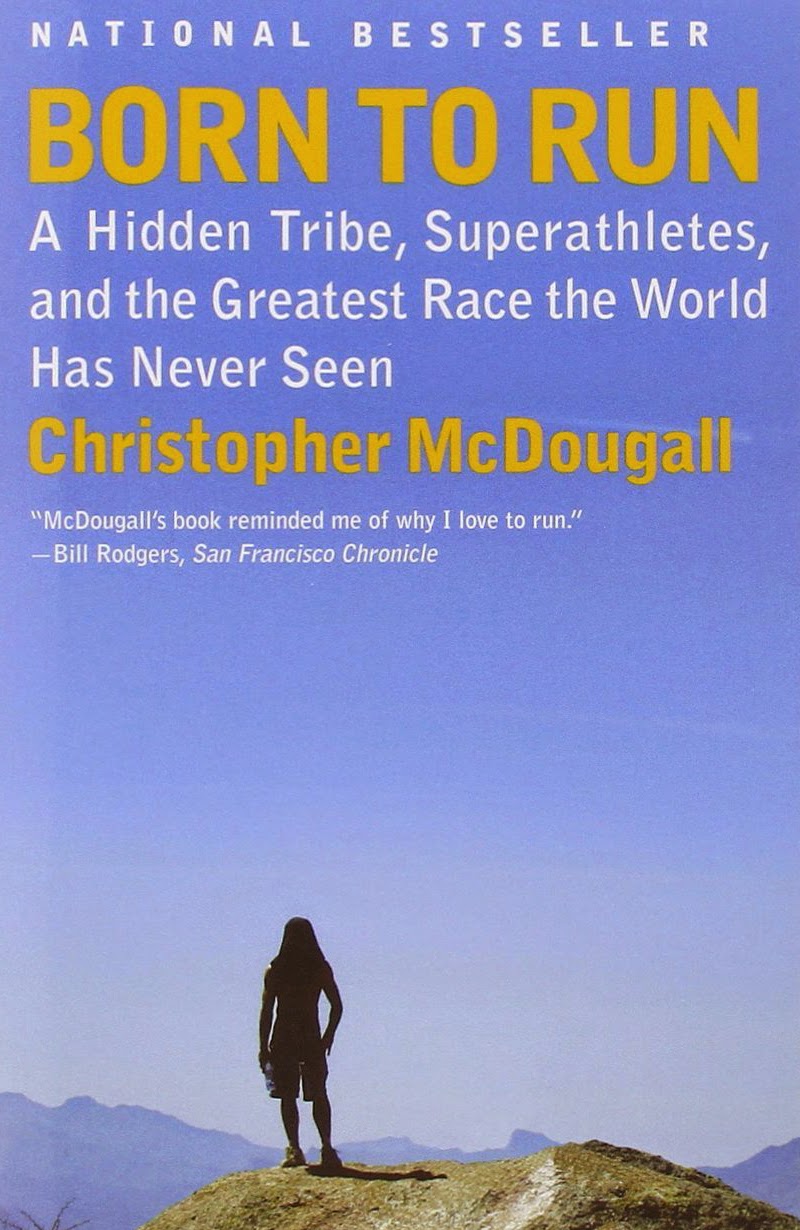
REVIEW: Born to Run

"Born to Run" by Christopher McDougall
"Born to Run: A Hidden Tribe, Superathletes, and the Greatest Race the World Has Never Seen"
Christopher McDougall

Running injuries are one of the sport's few potential consequences, but with the release of "Born to Run" in 2009 and its promise of a better way, Christopher McDougall threw barefoot running into the spotlight and helped kick off a revolution. In "Born to Run," McDougall calls into question much of the common doctrine pertaining to training, diet, and running mechanics, and has since paved the way for some much needed debate on these topics. While the fervent interest in ditching one's shoes has since died down, "Born to Run" has left countless minimalist converts in its wake and the ideas presented in its pages are still worth talking about today as continued investigation brings new information to light.

Many runners can certainly relate to having pondered the nature of injury, but few have gone as far as McDougall in a search for answers. "Born to Run" begins with a simple attempt on McDougall's part to ascertain the cause of his running injuries and how he can prevent them, but it quickly sprawls into an adventure of epic proportions. McDougall's quest for running enlightenment brings him into contact with a host of eccentric experts, athletes, and coaches, and takes him on a journey deep into the Copper Canyons of Mexico to learn the secrets of running from the Tarahumara, a Native American group famed for their ability to run hundred of miles in nothing more than flimsy sandals. Through the melding of personal narrative and a well-curated assortment of thought-provoking research, McDougall crafts a truly remarkable novel.

With a cast of unforgettably offbeat characters and the interjection of controversial theory, "Born to Run" has all the makings of a great page-turner. Some may find fault with McDougall's liberal use of artistic license or the fact that the presented research had clearly been chosen to lead towards very specific conclusions, but "Born to Run" is an exemplar of good storytelling more than it is a memoir comprised of irrefutable facts. Taken with a grain of salt, "Born to Run" is an incredible read, especially for those who enjoy tales of adventure or have toyed with the idea of transitioning to minimalist running. Whether you end up loving it or hating it though, there's no denying that McDougall's premier novel has left a lasting impression on the culture and landscape of running, and if for nothing else, is worth reading so that you can engage in the inevitable discussions that continue to occur long after this book's initial publication.

Thursday, August 28, 2014

a measure of my fitness

After surviving Hell Week and completing the Basic Package, I took two days off from Freeletics, but I just couldn't bring myself to stay away any longer and I actually ended up doing an Aphrodite after yesterday's run. I found that choosing your own workouts though just isn't as satisfying as completing ones that have been assigned to you, so I made my commitment official today by signing up for the Coach, the 15-week paid version of the program.

When you sign up for the Coach, the first thing you do is decide whether you want to focus on cardio, strength, or both, and from there you are promised a series of customized workouts each week based on your progress and past performances. My primary goal is to become a more well-rounded athlete, so going with the Cardio & Strength Coach was an easy decision for me. After that was done, my first real task was to complete three exercises to test my athletic prowess and establish a baseline for the upcoming weeks. Once my results for the test were entered, I was promptly given the list of workouts for the first week of the program.

I won't be starting with the Coach until Monday though since I want my Freeletics schedule to start on the same day that my running schedule starts on each week, but I'm definitely excited to begin. I'm also ready to get back into things because the Freeletics team has just recently rolled out a ton of new changes to the program, and I'm really interested in trying them out. Early reports seem to suggest that some of the changes are great, while others are half-baked, but either way, Monday is the official kick off and I'm pumped to get back on a structured schedule.

Session 1: Pull Up Max (11) | Burpee Max (11) | Split Lunges Max (111)

Sunday, August 24, 2014

Freeletics: Basic Package Week 5

When King Leonidas instructed the 300 Spartan warriors under his command to "Ready your breakfast and eat hearty, for tonight we dine in Hell," he just as easily could have been talking about this past week as he was about facing an endless onslaught of Persians. The fifth week of the Freeletics Basic Package features a family reunion of the Greek deities that we've encountered thus far, and with sessions scheduled for all seven days of the week, some of those sessions even including multiple workouts, this final week is aptly known as "Hell Week." Here is where you really get to test your absolute limits, and see just how far you've come since starting your Freeletics journey.


Maybe you came to enjoy a particular workout or two along the way, or maybe you just hated them all. Either way, every workout that we've previously encountered from the Freeletics catalogue makes at least one reappearance in the final week. There are a few times where you're once again given the choice between Dione or Zeus, but otherwise, things are very clearly mapped out.

There are no rest days this week, but other than that, you can expect to be doing the usual, a single workout for nearly all of the sessions this week. However, on two of the days, you'll be given three workouts in a single session. The first time this happens, on Day 2, it actually isn't so bad since Squat Max, Push Up Max, and Metis are all short workouts, but on Day 7, the intensity is turned up as high as it will go. For the very last day of the Basic Package you're given a choice between Dione or Zeus, both incredibly difficult workouts in their own right, but just to ensure that everyone ends the program completely exhausted and humbled, a Metis and a Squat Max are tacked on as well.

The schedule this week was daunting, and it had my mind constantly at odds with itself every time I did a workout. It wasn't that I was unsure of whether or not I could do it, because at this point I knew at the very least I had committed myself to finishing no matter how long each session took. Instead, a battle raged within me over whether I should conserve my energy for the heavy training load or whether I should push as hard as I could on each workout. I knew that I would regret it if I reached the end of the week and didn't feel as though I had given my all, so I held nothing back.

I've been sore, and tired, and ravenously hungry every day this week, but I feel incredibly accomplished. I actually pushed myself so hard that I set new PB's on every one of the 11 workouts except for two. I flirted with my limits, and now I'm absolutely addicted to finding those boundaries and putting in the work to progress past them. My plan is to continue with my running and to take it much easier on my cross-training for a week, but then on September 1st, I'm coming back strong and I've decided that I'll be starting the 15-Week Cardio & Strength Coach.

Session 1: Zeus (29:45) (PB)
Session 2: Squat Max (220) (*) (PB) | Push Up Max (42) (*) (PB) | Metis (6:13)
Session 3: Dione (36:07) (PB)
Session 4: Aphrodite (24:43) (*) (PB)
Session 5: Zeus (26:39) (PB)
Session 6: Aphrodite (23:40) (*) (PB)
Session 7: Dione (32:46) (PB) | Metis (6:50) | Squat Max (235) (*) (PB)

Friday, August 15, 2014

Freeletics: Basic Package Week 4

Departing from what has become the typical routine of long, monstrous sessions, the fourth week of the Freeletics Basic Package actually gives us an incredibly short workout instead. But while each of the four Metis sessions can be completed in significantly less than 10 minutes time, it is still a formidable workout in its own right.

Metis calls for three rounds of burpees, climbers, and high jumps. With just 10 reps of each exercise in the first and third rounds and 25 reps in the second, this workout involves considerably less work than Aphrodite or Dione, the two other cardio workouts that we've seen thus far. The real difficulty in Metis lies in the fact that all three of the exercises are compound movements that demand a great deal of effort and stamina to be performed quickly. Combined that with the steep requirements on each of the movements to earn a star, and you're looking at one tough, albeit short, workout.

Metis Workout
A: Burpees | B: Climbers | C: High Jumps
I was skeptical about whether or not a workout as short as Metis would feel like enough, and I ended up being half right in my initial doubts. While it left me sweating and panting throughout the workout and immediately afterwards, within a few minutes of finishing and catching my breath, I found myself wanting to do more. Freeletics actually promotes going above and beyond what is called for on any given day when you're feeling up to it, but I figured I'd adhere to the guidelines of the Basic Package so that I could get a true sense of the outlined program.

I showed a lot of improvement over the week, knocking off about 20 seconds each time I attempted the Metis workout, and I'm really happy with that. The star, however, remained elusive for me. At this stage in training, the burpees were no problem at all, and even the climbers, which required your feet to come all the way up to the outside of your hands, didn't slow me down too badly; it was the high jumps that got me. Failing to get my knees to my shoulders on each rep meant that I had to resort to the modified version of the exercise, but unlike with the pull ups and leg levers of previous weeks, I'm fairly confident that I'll be able to nail a star on the high jumps in the near future since I'm already pretty close.

With only one week left in the Freeletics Basic Package and school about to start again, I'll have to decide how best to continue with my training. I'm unsure of whether I want to buy the Coach, a 15-Week training program that customizes your sessions based on your goals and the results from your previous weeks, or if I want to just go at it on my own in a less structured manner. I'll definitely have to give the whole thing some thought over the next several days.

Session 1: Metis (6:20) (PB)
Session 2: Metis (5:55) (PB)
Session 3: Metis (5:29) (PB)
Session 4: Metis (5:09) (PB)

Monday, August 11, 2014

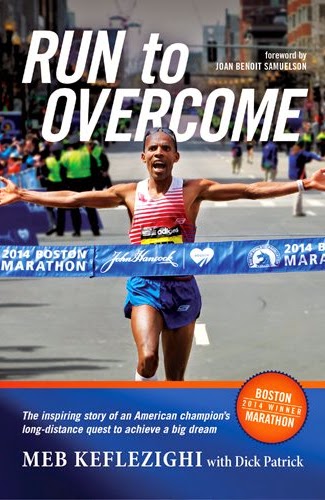
Review: Run to Overcome

"Run to Overcome" by Meb Keflezighi
"Run to Overcome: The Inspiring Story of an American Champion's Long-Distance Quest to Achieve a Big Dream"
Meb Keflezighi with Dick Patrick

As an Olympic medalist and the winner of several national road racing, track, and cross country titles, Meb Keflezighi is an incredibly prominent athlete, but it was his victories at the New York City Marathon in 2009 and the Boston Marathon in 2014 that took him from acclamation within the running community to becoming a household name and a symbol of achievement. Keflezighi is the epitome of the American dream and what can be accomplished through determination, and "Run to Overcome" is his story of rising up from humble beginnings to maturing into one of the most distinguished long distance runners of our time. With the help of sports journalist Dick Patrick, Keflezighi has put together an astounding autobiography that not only inspires you to be a better runner, but to be a better person as well.

"Run to Overcome" establishes its themes of hard work, sacrifice, and perseverance early as it begins with Keflezighi's harrowing exodus from his war-torn homeland of Eritrea. From there, Keflezighi's entire life journey is laid out before us, right up until his win in Boston earlier this year. Along the way, Keflezighi describes a wide variety of struggles and successes, but the one thing that remains consistent throughout the book is his unwavering dedication. While reading "Run to Overcome" you can literally feel the immense focus that drives Keflezighi, and it is truly awe-inspiring. Whether he is talking about managing his training, meeting and courting his future wife, or dealing with the loss of close friend and teammate Ryan Shay, you can tell that Keflezighi puts his entire heart into everything he does.

In addition to the deeply intimate accounts that he offers within "Run to Overcome," Keflezighi also provides a fascinating peak behind the scenes of professional running. Reading about elite training schedules, the powers of the anti-doping agencies, and the stringency of performance contracts was like being indoctrinated into a secret society. Far from being filler, these brief exerts sprinkled throughout the book complement Keflezighi's personal narrative well and provide a unique perspective that sheds light on areas of the sport that most individuals would never even think about.

The one area in which "Run to Overcome" falters though is in its overabundant presentation of race results throughout the book. Several chapters include detailed lists of finishing times and podium outcomes, with very little, if any, narration to accompany them. Seeing the names of Keflezighi's high school and college rivals who would later go on to become Olympians and world champions was certainly interesting, but the inclusion of so many numbers and sports statistics was distracting from the overall message of the book.

Much like Keflezighi's career, "Run to Overcome" has its highs and lows, but the vast majority of it is overwhelmingly great. Keflezighi is an individual who has accomplished so much through faith and sheer force of will, yet he always manages to find more to give. After the horrific bombings that took place at the 2013 Boston Marathon, the American running community and Bostonians alike needed a hero more than ever to help overshadow those terrible events and assist with the healing process. As the first American male to win the Boston Marathon in 31 years, Keflezighi stepped up as that hero, and "Run to Overcome" is his story of reaching that pinnacle of success. Keflezighi's "Run to Overcome" is captivating and inspiring, truly a book worthy of being a part of every runner's collection.

Friday, August 8, 2014

Freeletics: Basic Package Week 3

Big changes occur in the third week of the Freeletics Basic Package, and instead of the Aphrodite workout that has thus far been the bread and butter of the program, we're given two completely new workout routines instead. The first is heavier on cardio, so if your goal is to lose weight, choose Dione; the second, on the other hand, is more focused on strength, so if you're looking to build muscle, choose Zeus. There is, of course, always the third option of choosing to alternate the two workouts for a more balanced approach, and this is exactly what I ended up doing with my sessions for the week.

Dione involves three rounds of high intensity cardio, with each round consisting of 75 jumping jacks, 25 burpees, 50 leg levers, 75 jumping jacks, 50 sit-ups, and 25 burpees. Compared to the mega sets of burpees featured in Aphrodite, Dione actually looks pretty easy on paper. This is a trap you don't want to fall victim to though, because once you start the workout, you soon realize that it's not the repetitions you have to worry about here; it's the recovery. The sit-ups, leg levers, and jumping jacks get the heart racing almost immediately and then they end so quickly that you hardly have time to catch your breath before you're off doing another set of burpees. It's an unbelievably intense workout that definitely gets the sweat dripping, and it's not one to be taken lightly.

Dione Workout
A: Jumping Jacks | B: Burpees | C: Leg Levers | D: Sit-Ups
Zeus, the mighty ruler of the Olympians, is an entirely different kind of beast. This is a workout that is all about strength, and while there are two minutes of mandatory recovery between each round, the four rounds of 5 handstand push ups, 15 pull ups, 25 push ups, 35 sit-ups, and 45 squats will take some serious muscle if you're looking to pull off a star performance.

Zeus Workout
A: Handstand Push Ups | B: Pull Ups | C: Push Ups | D: Sit-Ups | E: Squats | X: Rest
At the start of the week, with Zeus looming on the horizon, I knew my ride on the star performance train would be coming to an end; there was just no way at this stage in the game that I was going to be able to do the handstand push ups and the pulls ups without switching to the modified versions. I did not, however, foresee that it would actually be Dione that would bring about the demise of my star streak. When it came to it though, I just could not get my legs completely straight up without having my hands beneath me, instead of having them at my sides.

While I still felt like I worked really hard, performance was obviously not a major success this week; the real victory was in fully embracing the whole "the world is your gym" philosophy that is often touted by Freeletics athletes and other bodyweight trainers. My wife and I went to visit her parents for the week, so I did the Dione workouts in the backyard to avoid annoying the rest of the house with all of the jumping around, and since I didn't have a pull up bar with me, I drove to a nearby park for the Zeus workouts. There was just something really invigorating about hitting the earth and kicking up grass. I wouldn't necessarily want to do it every day, but I really enjoyed it and I will definitely be incorporating some more outdoor workouts into my routine in the future.

As the week draws to a close for my Freeletics workouts, I'm left with only my long run to look forward to tomorrow. The weather is supposed to be perfect for a five mile jaunt, and once that's in the books, it will be just about time to start thinking about what the fourth week of Freeletics will bring.

Session 1: Dione (39:36) (PB)
Session 2: Zeus (31:16) (PB)
Session 3: Dione (38:42) (PB)
Session 4: Zeus (30:13) (PB)