Showing posts with label book review. Show all posts

Tuesday, September 2, 2014

REVIEW: Born to Run

"Born to Run" by Christopher McDougall
"Born to Run: A Hidden Tribe, Superathletes, and the Greatest Race the World Has Never Seen"
Christopher McDougall

Running injuries are one of the sport's few potential consequences, but with the release of "Born to Run" in 2009 and its promise of a better way, Christopher McDougall threw barefoot running into the spotlight and helped kick off a revolution. In "Born to Run," McDougall calls into question much of the common doctrine pertaining to training, diet, and running mechanics, and has since paved the way for some much needed debate on these topics. While the fervent interest in ditching one's shoes has since died down, "Born to Run" has left countless minimalist converts in its wake and the ideas presented in its pages are still worth talking about today as continued investigation brings new information to light.

Many runners can certainly relate to having pondered the nature of injury, but few have gone as far as McDougall in a search for answers. "Born to Run" begins with a simple attempt on McDougall's part to ascertain the cause of his running injuries and how he can prevent them, but it quickly sprawls into an adventure of epic proportions. McDougall's quest for running enlightenment brings him into contact with a host of eccentric experts, athletes, and coaches, and takes him on a journey deep into the Copper Canyons of Mexico to learn the secrets of running from the Tarahumara, a Native American group famed for their ability to run hundred of miles in nothing more than flimsy sandals. Through the melding of personal narrative and a well-curated assortment of thought-provoking research, McDougall crafts a truly remarkable novel.

With a cast of unforgettably offbeat characters and the interjection of controversial theory, "Born to Run" has all the makings of a great page-turner. Some may find fault with McDougall's liberal use of artistic license or the fact that the presented research had clearly been chosen to lead towards very specific conclusions, but "Born to Run" is an exemplar of good storytelling more than it is a memoir comprised of irrefutable facts. Taken with a grain of salt, "Born to Run" is an incredible read, especially for those who enjoy tales of adventure or have toyed with the idea of transitioning to minimalist running. Whether you end up loving it or hating it though, there's no denying that McDougall's premier novel has left a lasting impression on the culture and landscape of running, and if for nothing else, is worth reading so that you can engage in the inevitable discussions that continue to occur long after this book's initial publication.

Monday, August 11, 2014

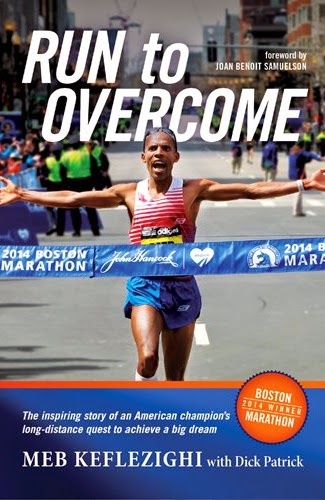
Review: Run to Overcome

"Run to Overcome" by Meb Keflezighi
"Run to Overcome: The Inspiring Story of an American Champion's Long-Distance Quest to Achieve a Big Dream"
Meb Keflezighi with Dick Patrick

As an Olympic medalist and the winner of several national road racing, track, and cross country titles, Meb Keflezighi is an incredibly prominent athlete, but it was his victories at the New York City Marathon in 2009 and the Boston Marathon in 2014 that took him from acclamation within the running community to becoming a household name and a symbol of achievement. Keflezighi is the epitome of the American dream and what can be accomplished through determination, and "Run to Overcome" is his story of rising up from humble beginnings to maturing into one of the most distinguished long distance runners of our time. With the help of sports journalist Dick Patrick, Keflezighi has put together an astounding autobiography that not only inspires you to be a better runner, but to be a better person as well.

"Run to Overcome" establishes its themes of hard work, sacrifice, and perseverance early as it begins with Keflezighi's harrowing exodus from his war-torn homeland of Eritrea. From there, Keflezighi's entire life journey is laid out before us, right up until his win in Boston earlier this year. Along the way, Keflezighi describes a wide variety of struggles and successes, but the one thing that remains consistent throughout the book is his unwavering dedication. While reading "Run to Overcome" you can literally feel the immense focus that drives Keflezighi, and it is truly awe-inspiring. Whether he is talking about managing his training, meeting and courting his future wife, or dealing with the loss of close friend and teammate Ryan Shay, you can tell that Keflezighi puts his entire heart into everything he does.

In addition to the deeply intimate accounts that he offers within "Run to Overcome," Keflezighi also provides a fascinating peak behind the scenes of professional running. Reading about elite training schedules, the powers of the anti-doping agencies, and the stringency of performance contracts was like being indoctrinated into a secret society. Far from being filler, these brief exerts sprinkled throughout the book complement Keflezighi's personal narrative well and provide a unique perspective that sheds light on areas of the sport that most individuals would never even think about.

The one area in which "Run to Overcome" falters though is in its overabundant presentation of race results throughout the book. Several chapters include detailed lists of finishing times and podium outcomes, with very little, if any, narration to accompany them. Seeing the names of Keflezighi's high school and college rivals who would later go on to become Olympians and world champions was certainly interesting, but the inclusion of so many numbers and sports statistics was distracting from the overall message of the book.

Much like Keflezighi's career, "Run to Overcome" has its highs and lows, but the vast majority of it is overwhelmingly great. Keflezighi is an individual who has accomplished so much through faith and sheer force of will, yet he always manages to find more to give. After the horrific bombings that took place at the 2013 Boston Marathon, the American running community and Bostonians alike needed a hero more than ever to help overshadow those terrible events and assist with the healing process. As the first American male to win the Boston Marathon in 31 years, Keflezighi stepped up as that hero, and "Run to Overcome" is his story of reaching that pinnacle of success. Keflezighi's "Run to Overcome" is captivating and inspiring, truly a book worthy of being a part of every runner's collection.

Tuesday, July 29, 2014

Review: What I Talk About When I Talk About Running

"What I Talk About When I Talk About Running" by Haruki Murakami
"What I Talk About When I Talk About Running: A Memoir"
Haruki Murakami

As a prominent Japanese novelist, Haruki Murakami has written dozens of books, short stories, and essays, but it is "What I Talk About When I Talk About Running" that serves as his personal memoir, an earnest narrative that provides a glimpse into Murakami's approach to writing and running. It quickly becomes very clear to the reader that these two activities, writing and running, are of paramount importance in Murakami's life, and if the book offers one clear takeaway, it's that devoting your life to your passions is the surest way to live fulfilled.

"What I Talk About When I Talk About Running" tracks Murakami's training over the course of a racing season as he prepares for the New York City Marathon in November and then the Murakami International Triathlon of the following year, and it does this in a very distinctive style, interweaving exerts from Murakami's training diary and stories from his past. The book comes across as somewhat disorganized as it jumps around in chronology and from idea to idea, and many readers may find fault with this approach. In actuality, however, "What I Talk About When I Talk About Running" mirrors the very essence of running itself; much like a runner taking time before settling into a rhythm, the first chapter of Murakami's memoir is erratic and disjointed, but the book soon finds its groove and the pacing becomes more fluid.

While this type of delivery in a book is certainly not for everyone, "What I Talk About When I Talk About Running" really nails the wandering, free-flowing thought process that runners experience as the miles tick by. Unencumbered by the need for a rigorous structure, Murakami shares his spontaneous musings, and then proceeds to ruminate on these thoughts and attempt to discern any significance that they might possess. It is here in Murakami's descriptions of the mundane that "What I Talk About When I Talk About Running" really shines; whether its his loyalty to a specific make and model of shoe or his description of the anxiety one feels over every minor ache prior to a race, every runner will find something they can relate to. Through reading Murakami's narration of thoughts that perfectly echo our own, it is as though our existence in the running community is confirmed.

When it comes down to it, "What I Talk About When I Talk About Running" is a book about intrinsic motivation, self-reflection, and pursing what one loves. Because Murakami employs a more contemplative delivery and a slower pace than other books in the running memoir genre, "What I Talk About When I Talk About Running" is not for someone looking for the typical globe-trotting adventure that chronicles exotic races. Instead, this book is suited for any runner who would like to better understand their own reasons for running. If you're looking for something a little more thought-provoking than the usual fare, pick up a copy of "What I Talk About When I Talk About Running," and allow yourself the opportunity to read it in one or two sessions to fully appreciate its meandering flow and tranquil pace.

Tuesday, January 7, 2014

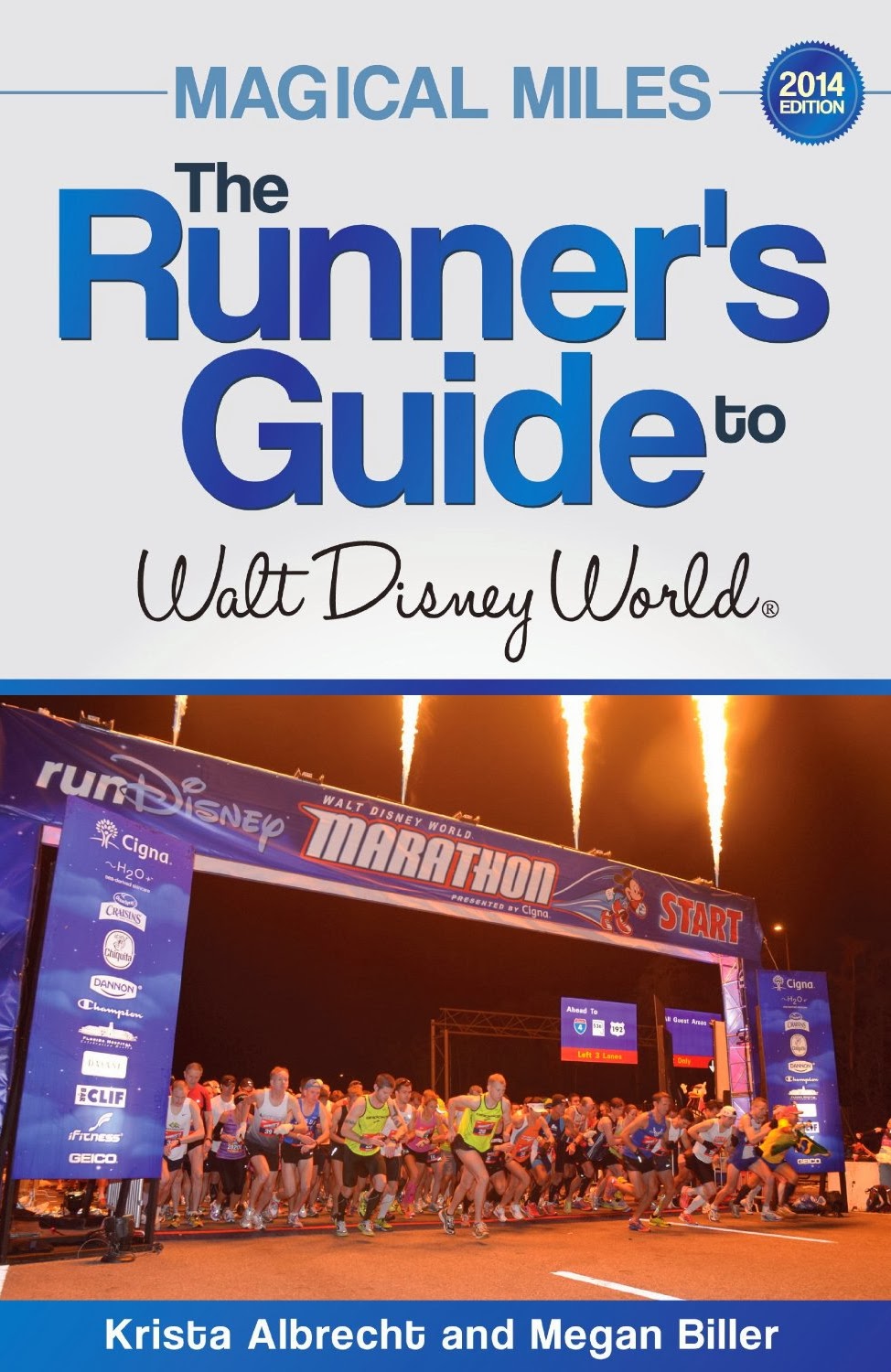
Review: Magical Miles

"Magical Miles" by Krista Albrecht & Megan Biller
"Magical Miles: The Runner's Guide to Walt Disney World"
Krista Albrecht & Megan Biller

Destination races can be stressful, especially in a place as hectic as Disney World, but Krista Albrecht and Megan Biller have put together "Magical Miles," a travel guide with all of the information a runner would need to make the experience memorable and hassle-free. With a shared passion for running and all things Disney, the pair have completed every runDisney event at least once, and have become experts on the logistics of planning a running vacation at either of the Disney properties. Since Albrecht and Biller have always declined offers of free race entry and discounted accommodations in favor of being able to provide honest and candid reviews, you can be sure that the information contained in "Magical Miles" is not only thorough, but trustworthy as well.

"Magical Miles" reads like most other travel guides. The various options for accommodations are covered extensively, and each of the numerous restaurants throughout the resort are described in terms of their price, location, and offerings. Once you get past all of the general information though, you get to the sections that set "Magical Miles" apart from other guides, the sections that make it uniquely suited for runners. Albrecht and Biller cover everything about participating in a runDisney event, from getting to the starting line to celebrating the accomplishment afterwards.

Some of the information that the pair provide, like the transportation on race weekend and the detailed descriptions of the courses, are just reiterations of the information one would receive prior to their race, but Albrecht and Biller also provide insights that are not as readily available. "Magical Miles" does a great job explaining how to successfully navigate the expo and which of the pre-race and post-race activities are really worth the investment, and while the book is billed as "The Runner's Guide to Walt Disney World," some of its best tips and advice pertain to those spectating an event.

Despite offering a wealth of knowledge, "Magical Miles," is certainly not without its flaws. The two most obvious weaknesses are the numerous typographical errors throughout its pages and the fact that it gets fairly monotonous at times. The first is definitely easy enough to fix, and will hopefully be taken care of during the editing for future editions, but more effort will need to be put into making a few areas of the book sound more organic if the book is to become truly great. There are parts in the accommodations and dining option sections that are literally copied and pasted, making these sections read as though they were ripped straight from a brochure; the book would certainly read better if these reviews were written with as much personality as is brought forth throughout the rest of the book.

With information so readily available on the internet, travel guides appear to be on the decline, right alongside travel agents and in-flight freebies. In fact, Albrecht and Biller update an awesome blog regularly with all of the information you could ever want on runDisney happenings. Despite the odds though, the authors have put together something special. Like most guide books, "Magical Miles" is not really the kind of book you would read cover to cover, but as a resource that caters to the small percentage of people that love runDisney events and still use travel guides, it is unmatched. If for nothing else, "Magical Miles" would serve as a good book to peruse on your flight to Florida or as a convenient resource to throw in your bag while exploring the parks.

Tuesday, December 17, 2013

Review: ChiRunning

"ChiRunning" by Danny Dreyer
"ChiRunning: A Revolutionary Approach to Effortless, Injury-Free Running"
Danny Dreyer & Katherine Dreyer

As a student of T'ai Chi, Danny Dreyer believed that the fundamental principles of the practice could be applied to running in a way that would make the sport easier and less likely to cause injury. Once the idea was seeded, Dreyer worked to perfect the technique, dubbed it ChiRunning, and soon began teaching his unique approach to others. As his classes began to gain notoriety, his wife Katherine Dreyer, who is given coauthor credit for the book but only appears to have served in an editorial capacity, encouraged Dreyer to publish his running methodology, and in 2004 "ChiRunning" debuted to critical acclaim.

While it seems the majority of people have only the highest praises to speak of "ChiRunning," it really isn't all that it's cracked up to be. Dreyer's nonchalant delivery, offbeat references, and just plain wrong information make it tough to put a lot of faith in the book. Some of Dreyer's misconceptions are excusable since they have been perpetuated for so long, like when he says that pronation should be eliminated, but at other points the information he provides is nearly laughable. It's hard to take Dreyer seriously as he instructs runners to put emphasis into the backswing of their arm movement or when he preaches the merits of running up hills sideways.

"ChiRunning" does, however, offer a few pieces of sound advice in its pages, but they are beat to such redundancy that it's hard to find much reason to choose this book over other resources. If you're looking to decrease your risk of injury by making improvements to your form, a little bit of research will provide you with all of the same points Dreyer repeats throughout his book: relax your limbs, lean from your ankles, shorten your stride, and increase your cadence.

Aside from the above advice on improving form, "ChiRunning" concludes with sections on designing training schedules, optimizing race potential, and incorporating a healthier diet, but just like the form tips, this information is readily available online as well. Ignoring the inaccuracies and fallacies sprinkled throughout, "ChiRunning" is merely a rehashing of easily accessible knowledge dressed up with a little bit of Eastern philosophy for the sole purpose of selling more books.

Even with all of its flaws and the fact that it offers little to the advancement of fitness literature, "ChiRunning" could be considered passable if it weren't for the testimonies and self-praise incorporated into nearly every chapter. Because of this, the book ends up being more of an advertisement for Dreyer's program and brand than a reference manual for bettering your running. It seems that Dreyer has made a superficial attempt to cash in on a niche market, and this has led to a work that ultimately falls far short of being a true success.

Friday, December 6, 2013

Review: 4:09:43

"4:09:43" by Hal Higdon
"4:09:43: Boston 2013 Through the Eyes of the Runners"
Hal Higdon

Best known for his detailed training plans that have helped countless runners reach their goals of completing 5K's, marathons, and every distance in between, Hal Higdon is both an accomplished runner and a talented writer. Higdon proclaims that his latest release, "4:09:43," is among his greatest works yet, no small claim from an otherwise modest individual who has penned literally dozens of books, and it is hard to disagree as Higdon masterfully combines great story telling with the accurate presentation of a major historical event. While some critics have been quick to dismiss the book for not focusing enough on the bombings themselves, they clearly have missed the point; "4:09:43" is about the experience of running the Boston Marathon, and aside from the terrible tragedy that occurred on April 15, 2013, Marathon Monday in Boston has always been a day of celebration, a day when dreams are realized and the human spirit prevails. "4:09:43" is not a depressing play-by-play of the grievous events that forever changed the future of running, but instead, it is a book that captures the prestige of the Boston Marathon and the strength of the running community.

I have not run Boston, nor have I even had the chance to visit the great city, but Higdon provides such a vivid description of the events on Patriot's Day in Boston that it is easy to imagine yourself alongside fellow runners and the thousands of cheering spectators. Everything about the experience is noted, from boarding the school buses that transport runners to Hopkinton for the start of the race to sprinting the final meters down Boylston Street towards the finish. It is this description where "4:09:43" really shines, as it is not just Higdon's interpretation of running the Boston Marathon, but rather the combined experiences of nearly a hundred different runners that were in Boston this past April.

Following the events of the Boston Marathon Bombings, an abundance of blog posts and race reports were written and shared online. Fearing that these stories would eventually be neglected and lost in the infinite realm of cyberspace, Higdon made it his mission to collect and preserve these personal accounts. From there, Higdon began to weave these separate tales into a cohesive retelling of the 117th running of the Boston Marathon.

While the vast majority of "4:09:43" details the events preceding the explosions on Boylston Street, the final chapters of the book chronicle the bewilderment and panic that ensues as the bombs detonate and the news begins to spread. Even in these final chapters though, Higdon refrains form describing the graphic details of the tragedy, and instead leaves us in the heads of the runners as the day turns from celebration to confusion and despair. "4:09:43" at no point becomes a news report, and its message of hope and strength is consistent throughout, right to the very last page where a runner informs a security officer at Logan Airport that he will return for Boston 2014.

"4:09:43" is expected to hit shelves at the end of January, and Amazon is currently taking pre-orders. It is the first of what is sure to be many books about the 2013 Boston Marathon, but with its unique way of piecing together dozens of individual accounts into an inspiring singular narrative, it is sure to remain one of the best. Higdon presents an uplifting outlook on the running community as a whole, and "4:09:43" is the perfect book for those aspiring to run Boston or anyone interested in the major events of our sport.

Thursday, November 21, 2013

Review: Ultramarathon Man

"Ultramarathon Man" by Dean Karnazes
"Ultramarathon Man: Confessions of an All-Night Runner"
Dean Karnazes

Due to his miraculous resistance to muscle degradation and the ability to recover while on the move, Dean Karnazes is theoretically capable of running forever if he is supplied with adequate food and fluid. This makes Karnazes a real life superhuman, and "Ultramarathon Man" serves as his origin story, describing his transformation form mortal runner to running machine.

As Karnazes has risen to the top of his game, becoming the poster child for extreme endurance, he has become an intensely polarizing figure; he's one of those guys who you either love or you hate. "Ultramarathon Man" perfectly exemplifies this fact, and whether you enjoy reading it or not is entirely dependent on your mindset going in. If you want to hate on it you can certainly find your reasons, most people in this camp arguing that Karnazes is overbearingly egotistical, but if you approach it looking to read a case study on what the human body can actually be capable of, you won't be at all disappointed.

Following some expository information on how he began running and excluding a few minor chapters that help summarize the passage of time, "Ultramarathon Man" provides detailed accounts of Karnazes's participation in four major races: The Western States 100, The Badwater Ultramarathon, The First South Pole Marathon, and The Relay. While readers with a keen eye for detail may notice that Karnazes's South Pole run actually took place two years prior to his solo completion of The Relay, the switch in chronological order is a smart editorial decision, as it means the reader gets to experience greater spectacle with each new challenge, each feat of endurance being grander than the one that precedes it.

The most compelling aspect of "Ultramarathon Man" is getting to follow along with Karnazes's evolution as a runner. As he starts out, everything is a learning experience, from initially discovering the existence of ultrarunning to the importance of running the white line along the shoulder in Badwater so that the soles of his shoes do not melt. With each race he gains new knowledge and insights, and by the time he is running The Relay as a solo participant, a 199 mile relay event generally completed in teams consisting of 12 members, he has more than a handful of tips and mental tricks up his sleeve.

Like Karnazes himself, "Ultramarathon Man" never slows down; it starts strong, and it finishes stronger. While Karnazes's achievements are far beyond the capabilities of most, readers will definitely be able to relate to the idea of steady persistence and determination paying off, as well as to the highs and lows one can experience when truly pushing oneself to their limit.

Sunday, November 17, 2013

Review: My Life on the Run

"My Life on the Run" by Bart Yasso
"My Life on the Run: The Wit, Wisdom, and Insights of a Road Racing Icon"
Bart Yasso

While published back in 2009, it seemed fitting to have my first review be of a book I found deeply inspiring and written by an individual who, despite not having met, I really admire. For those unfamiliar, Bart Yasso is often regarded as the "Mayor of Running," an individual who has worked at Runner's World magazine for nearly 30 years. Since taking up running, he has participated in a wide variety of races all across the globe, and he has worked tirelessly to spread the joys of running to others.

"My Life on the Run" is divided into two sections, the first of which provides an autobiographical account of Yasso's running career by highlighting his experiences with the sport, each chapter chronicling a unique running exploit. While his adventures have taken him to all sorts of exotic locations around the world and reading about them is enough to make anyone envious, Yasso never comes across as pretentious in his delivery; in fact, he comes across as quite the opposite. 

Yasso presents each anecdote candidly, as if sharing his stories with close friends, never over embellishing or attempting to brag. While reading the rundown of each account you get the sense that he is just a regular guy, rather than the legend he really is. Whether describing the majesty of running in the arctic, the awkwardness of delivering a keynote address in the nude, or the struggles of completing the Badwater Ultramarathon, Yasso's tone remains casual and sincere as each tale unfolds. It is clear in his writing that he is extremely grateful for the opportunities that running has provided him with, and his message of running as a form of rejuvenation is made all the more powerful as he weaves his struggles with addiction and Lyme disease into his stories.

Despite the incredibly strong start though, "My Life on the Run" begins to rapidly lose momentum towards the end of the first section. It is almost as if Yasso runs out of stories to share with his readers, and instead, shifts his focus to exploring a random assortment of topics to avoid publishing a book too short to fill its binding. The sincerity of the earlier chapters is still there as he describes notable runners who have inspired him and his indoctrination into the Running USA Hall of Champions, but even that fizzles out as he concludes the section with a report of "famous" costumed runners.

The second section of the book shifts drastically from the material covered in the first, and it serves as more of a reference guide than a narrative. In this section, Yasso provides training plans and descriptions of his favorite races. While most of the training information can easily be found online, a lot of stock can be put into Yasso's race recommendations given the fact that he has completed over 1,000 races. The suggested races are definitely interesting, and the list could easily be used by someone attempting to compile a running themed bucket list.

While "My Life on the Run" peters out towards the end, the stories alone make the book well worth purchasing. Each of Yasso's adventures are charismatic and earnest in their delivery, and their episodic nature make this book perfect for quick inspiration or for light pick up and put down reading.