Showing posts with label runDisney. Show all posts

Tuesday, January 7, 2014

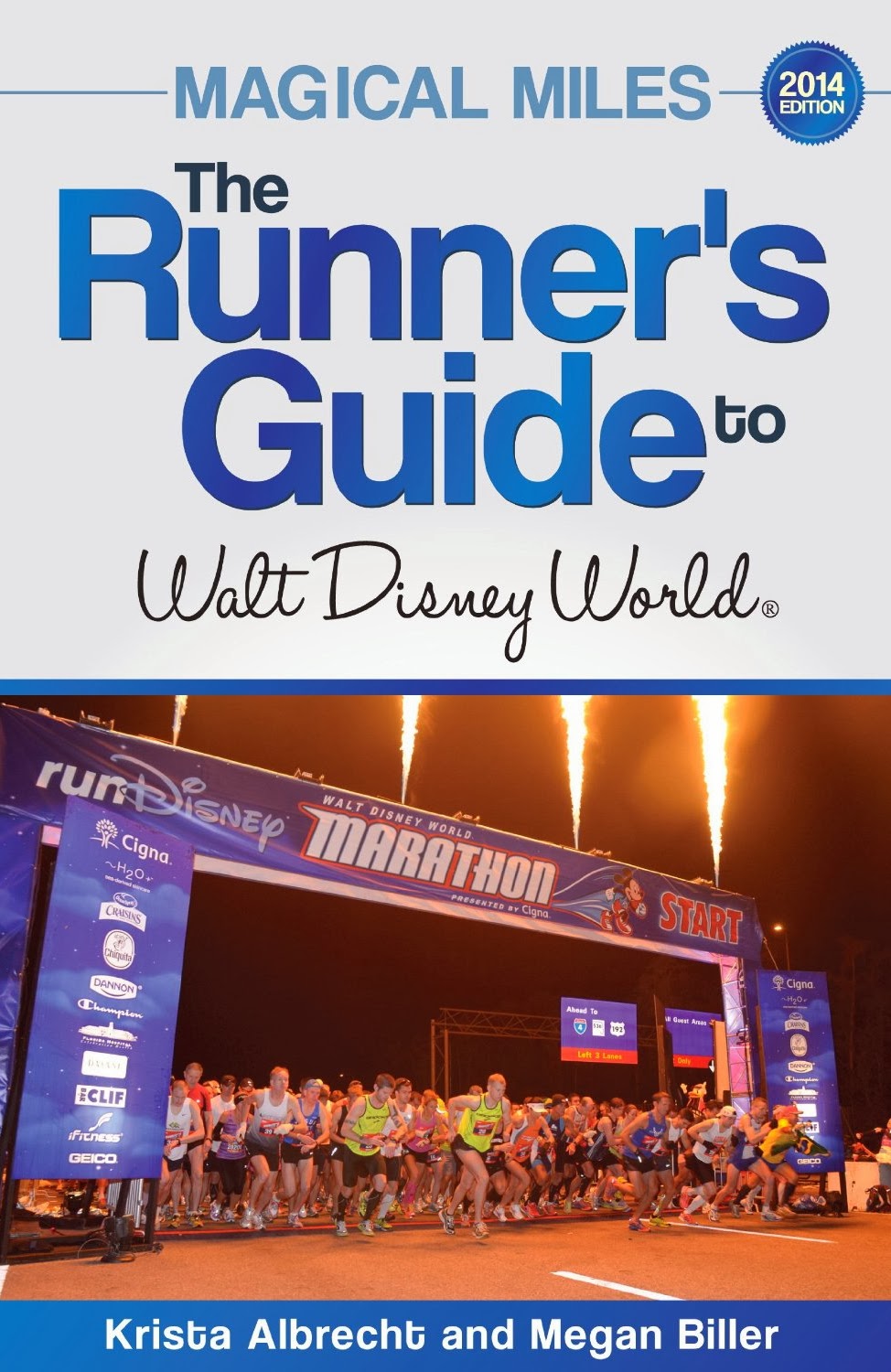
Review: Magical Miles

"Magical Miles" by Krista Albrecht & Megan Biller
"Magical Miles: The Runner's Guide to Walt Disney World"
Krista Albrecht & Megan Biller

Destination races can be stressful, especially in a place as hectic as Disney World, but Krista Albrecht and Megan Biller have put together "Magical Miles," a travel guide with all of the information a runner would need to make the experience memorable and hassle-free. With a shared passion for running and all things Disney, the pair have completed every runDisney event at least once, and have become experts on the logistics of planning a running vacation at either of the Disney properties. Since Albrecht and Biller have always declined offers of free race entry and discounted accommodations in favor of being able to provide honest and candid reviews, you can be sure that the information contained in "Magical Miles" is not only thorough, but trustworthy as well.

"Magical Miles" reads like most other travel guides. The various options for accommodations are covered extensively, and each of the numerous restaurants throughout the resort are described in terms of their price, location, and offerings. Once you get past all of the general information though, you get to the sections that set "Magical Miles" apart from other guides, the sections that make it uniquely suited for runners. Albrecht and Biller cover everything about participating in a runDisney event, from getting to the starting line to celebrating the accomplishment afterwards.

Some of the information that the pair provide, like the transportation on race weekend and the detailed descriptions of the courses, are just reiterations of the information one would receive prior to their race, but Albrecht and Biller also provide insights that are not as readily available. "Magical Miles" does a great job explaining how to successfully navigate the expo and which of the pre-race and post-race activities are really worth the investment, and while the book is billed as "The Runner's Guide to Walt Disney World," some of its best tips and advice pertain to those spectating an event.

Despite offering a wealth of knowledge, "Magical Miles," is certainly not without its flaws. The two most obvious weaknesses are the numerous typographical errors throughout its pages and the fact that it gets fairly monotonous at times. The first is definitely easy enough to fix, and will hopefully be taken care of during the editing for future editions, but more effort will need to be put into making a few areas of the book sound more organic if the book is to become truly great. There are parts in the accommodations and dining option sections that are literally copied and pasted, making these sections read as though they were ripped straight from a brochure; the book would certainly read better if these reviews were written with as much personality as is brought forth throughout the rest of the book.

With information so readily available on the internet, travel guides appear to be on the decline, right alongside travel agents and in-flight freebies. In fact, Albrecht and Biller update an awesome blog regularly with all of the information you could ever want on runDisney happenings. Despite the odds though, the authors have put together something special. Like most guide books, "Magical Miles" is not really the kind of book you would read cover to cover, but as a resource that caters to the small percentage of people that love runDisney events and still use travel guides, it is unmatched. If for nothing else, "Magical Miles" would serve as a good book to peruse on your flight to Florida or as a convenient resource to throw in your bag while exploring the parks.

Sunday, November 10, 2013

a review of my running history

I began running almost six years ago during my sophomore year of college to combat some of the characteristic weight gain that had occurred during my freshman year. I started out fairly slowly, never having been particularly active in organized sports, but gains came quickly and I soon became a bit too enthusiastic and overzealous in my running pursuits. By the end of my sophomore year, I was running distances far beyond my actual capabilities and I had just one goal on my mind: running a marathon.

With my sights set on the legendary distance I dove into a vicious cycle of training to the point of injury and then failing to achieve my goal. For the next two years I would aim for a marathon in the relatively distant future, and then one of two things would happen: I would either injure myself almost immediately and end up not signing up for the race at all, or I would injure myself in the later stages of training and resolve myself to dropping down to the accompanying half marathon.

It wasn't until my senior year of college that I finally succeeded in completing a marathon, but doing so came at great cost to my ability to run afterwards. I knew that I needed to raise the stakes to ensure actually making it to the starting line this time around, so my best friend and I signed up for the Walt Disney World Marathon in 2010, hoping that the financial investment of the trip would serve as a motivating force to get me through a complete training cycle. The plan had one major flaw though, and that was the fact that while I was definitely motivated, and in fact somewhat obligated after having arranged travel and accommodations, I wasn't any more likely to actually complete my training without injury than if I had just chosen another local race. As had become the expected pattern, I quickly found myself injured and unable to run more than a handful of miles between weeks of inactivity. Within the two months leading up to the marathon I literally hadn't run anything over eight miles, and if I call correctly, I had only managed that feat once.

As I chatted with those around me awaiting the start, the full weight of how grossly underprepared I was began to hit me. There I was, not having even broken double digits on a single run in the past couple of months, listening to people describe their anxieties over whether or not their twenty mile training runs would be enough to carry them through the race; needless to say it did nothing to bolster my confidence. Moreover, as if that hadn't been enough, Florida was experiencing record low temperatures all across the state, and I, thinking I was going to be taking a break from the frigid temperatures of January in New York, hadn't packed anything but shorts to run the race in. You know things aren't going well when you see volunteers pouring Gatorade powder on the ground at the aid stations to keep the spilled water from freezing.

Nevertheless, despite all of the odds stacked up against me, I managed to run the first 18 miles, and then somehow completed the rest of the course by alternating between some combination of running, walking, and limping to the end. The whole ordeal left me completely hobbled and nearly broken, but wanting to get the most out of my stay in Disney World, I popped Tylenol for the next week to mask the pain as I limped around the parks. When all was said and done, iliotibial band syndrome, otherwise known as ITBS, had become a permanent fixture in my life that plagued me consistently for the next few years.

At it's worst, I could barely run more than a half mile without being forced to come to a stop and then having to take a week or more off until I was able to try again. Surprisingly though, I still had a strong desire to run, so I began systematically trying everything that even had a chance of alleviating my ailment. Stretching, hip strengthening, and foam rolling all became staples of my routine, but nothing seemed to completely absolve the problem. It got to the point where there was just one thing left to try, and despite my reservations and my complete lack of faith in its purported healing powers, I took the leap into the world of barefoot and minimalist running this past summer.

Not wanting to risk making things worse than they already were, I followed all of the usual advice that gets tossed around when making the transition to ditching the shoes: I started out slowly in terms of both speed and distance, I worked on increasing my stride cadence, and I began concentrating more on my form and foot falls. I was extremely skeptical when I first started out, but I have to admit, things seemed to start falling into place as soon as I kicked off the shoes. Now I can comfortably run a couple of miles at a time, and while I still get twinges in my IT bands every now and again, it's certainly not the debilitating, sidelining injury it once was; for the time being I can be happy with that.